Birth Flowers by Month
Like birthstones, every month has its own flower, and most months have two. Each one carries a meaning, from January's carnation (love and admiration) to December's holly (protection and good will), which makes a birth flower an easy way to make a birthday gift feel personal.
The chart below uses the list most US florists and almanacs follow. There is no single official version, so where another flower is commonly listed for a month, that month's page says so.
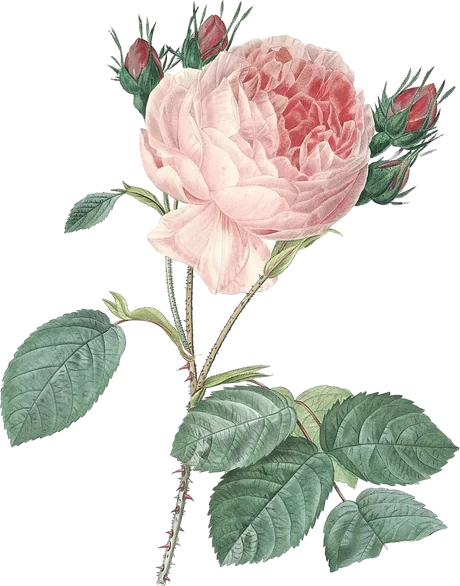
Rosa
Redouté's plate 79 is the cabbage rose, Rosa × centifolia.
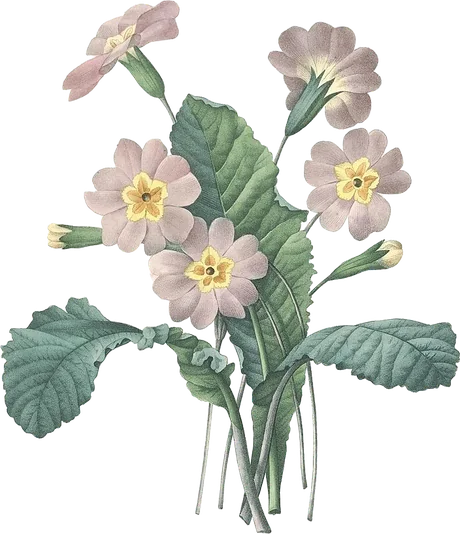
Primula vulgaris
Redouté's plate 95 is the common primrose, Primula vulgaris.
Birth month flowers chart
Primary flower first, then the second flower. Tap a month for meanings, colors, gift ideas and card messages.
| Month | Birth flowers | Meaning | Page |
|---|---|---|---|
| January | Carnation, snowdrop | Love, admiration and hope | Meanings → |
| February | Violet, primrose | Faithfulness, modesty and young love | Meanings → |
| March | Daffodil, jonquil | Rebirth, hope and new beginnings | Meanings → |
| April | Daisy, sweet pea | Innocence, joy and thank you | Meanings → |
| May | Lily of the valley, hawthorn | Return of happiness and hope | Meanings → |
| June | Rose, honeysuckle | Love, devotion and happiness | Meanings → |
| July | Larkspur, water lily | Open heart, lightness and purity | Meanings → |
| August | Gladiolus, poppy | Strength, integrity and remembrance | Meanings → |
| September | Aster, morning glory | Love, wisdom and affection | Meanings → |
| October | Marigold, cosmos | Warmth, creativity and harmony | Meanings → |
| November | Chrysanthemum, peony | Friendship, joy and long life | Meanings → |
| December | Narcissus (paperwhite), holly | Hope, good wishes and protection | Meanings → |
November's second flower, the peony, appears on some modern lists only. Lists in the UK and elsewhere vary slightly.
How to use a birth flower as a gift
A birth flower turns a generic present into one that is clearly theirs. Six ways to use it, from a bouquet to a link you can send in a minute.
A bouquet on the day
The classic. Use the color meanings on each month's page to pick a shade that fits the relationship: a pink carnation for a mother, yellow roses for a friend, purple asters for a mentor.
A plant that comes back
Several birth flowers are better as plants than cut stems. Snowdrop, daffodil and paperwhite bulbs, a potted mum, a primrose or a native honeysuckle keep flowering long after the birthday.
Their flower on something they keep
A framed botanical print, a mug, a scarf, an embroidered bag or a pendant with their birth flower is personal without being expensive. It also works for flowers you can't buy, like water lilies or hawthorn.
A family garden
For a parent or grandparent, combine the birth flowers of everyone in the family into one bouquet, print or planting. It is a popular Mother's Day idea and easy to make your own.
A card that explains it
Most people don't know their birth flower, so a line about what it means turns an ordinary card into a small discovery. Each month's page has original card messages you can use.
A digital bouquet, sent today
If they live far away or the flower is out of season, arrange a free digital bouquet online, add your message and send it as a private link. It arrives instantly and never wilts.
Every month at a glance
Birth flower questions
What is my birth flower?
Find your birth month in the chart above. Most months have two flowers: January is carnation and snowdrop, February violet and primrose, March daffodil and jonquil, April daisy and sweet pea, May lily of the valley and hawthorn, June rose and honeysuckle, July larkspur and water lily, August gladiolus and poppy, September aster and morning glory, October marigold and cosmos, November chrysanthemum, and December narcissus and holly.
Why do some months have two birth flowers?
The lists grew up from several traditions, and different sources settled on different flowers. Over time most American lists kept both, so many months now have a primary and a secondary flower.
Is there an official birth flower list?
No. There is no single authority. The list on this page is the one most US florists and almanacs use; UK lists and individual florists sometimes differ, and we note the common alternatives on each month's page.
Where do birth flowers come from?
There is no single origin. The lists most Americans know grew out of older European customs that linked flowers with months and seasons, the Victorian fashion for giving each flower a meaning, and the twentieth-century florist and gift trade, which settled on the pairs used today.
What is the difference between a birth flower and a birthstone?
Both are traditional symbols for a birth month. A birthstone is a gem, often given as jewelry; a birth flower is a bloom with its own meaning, given as flowers, a plant, a print, a card or a digital bouquet.
Can I give a birth flower that is out of season?
Yes. Many birth flowers, like carnations and roses, are available all year. For seasonal ones such as snowdrops or water lilies, give bulbs or a plant, a print, a card or a digital bouquet that shows the flower instead.
Looking for a flower's meaning rather than a month? See what flowers mean or flowers by occasion.
Botanical plates: Pierre-Joseph Redouté, Choix des plus belles fleurs (1827). Public domain, via Wikimedia Commons.